A lorry booked for collection, a commercial invoice prepared and a vessel or flight confirmed do not, by themselves, make a shipment ready to leave the UK. For most commercial movements leaving Great Britain, export declarations mandatory requirements apply before the goods can depart. Missing, inaccurate or late customs data can hold freight at the port, create storage charges and put delivery commitments at risk.
For exporters, the practical question is not simply whether a declaration is needed. It is who will submit it, which data they need, when customs permission must be obtained and how the entry aligns with the physical movement of the goods. Getting those points right keeps customs clearance controlled and predictable.
When are export declarations mandatory?
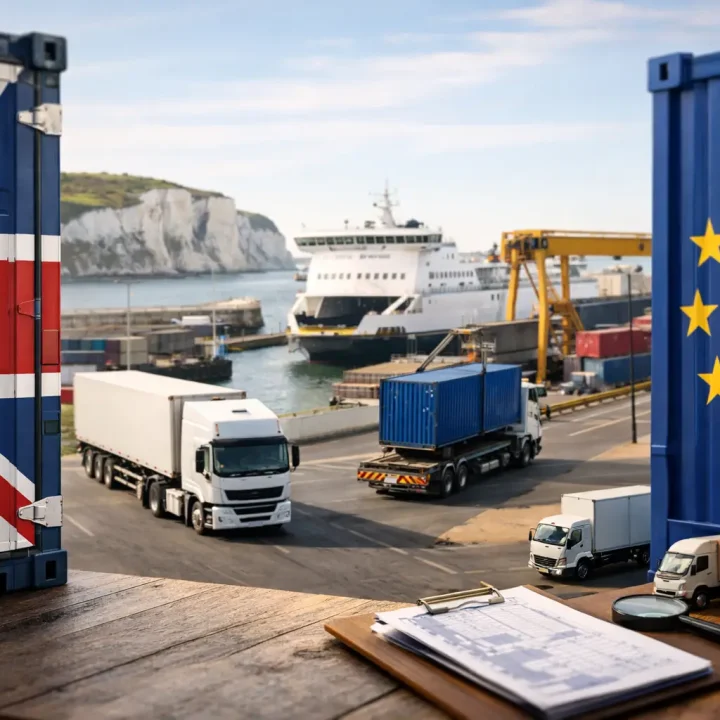
An export declaration is generally required when commercial goods move from Great Britain – England, Scotland and Wales – to a destination outside the UK. This includes exports to the EU, as well as shipments to the United States, China, the Middle East and other international markets.
The declaration is submitted electronically to HMRC through the Customs Declaration Service. It provides customs with a clear record of what is leaving the country, its value, origin, commodity classification, destination, parties involved and the customs procedure being used. Customs may use that information for trade statistics, export controls, sanctions screening and duty or VAT compliance.
A declaration is not determined by the freight mode. The same core obligation can apply whether goods travel by air freight, FCL or LCL sea freight, European road haulage, rail or courier. A single pallet sent urgently to France may need an export entry just as a full container shipped to Dubai does.
There are limited exceptions and simplified processes, but businesses should not assume that a low-value, sample or occasional shipment is exempt. The rules can vary according to the goods, destination, method of transport and customs status. Northern Ireland movements are subject to different arrangements, so they should be assessed separately before collection is booked.
Which exports need particular attention?
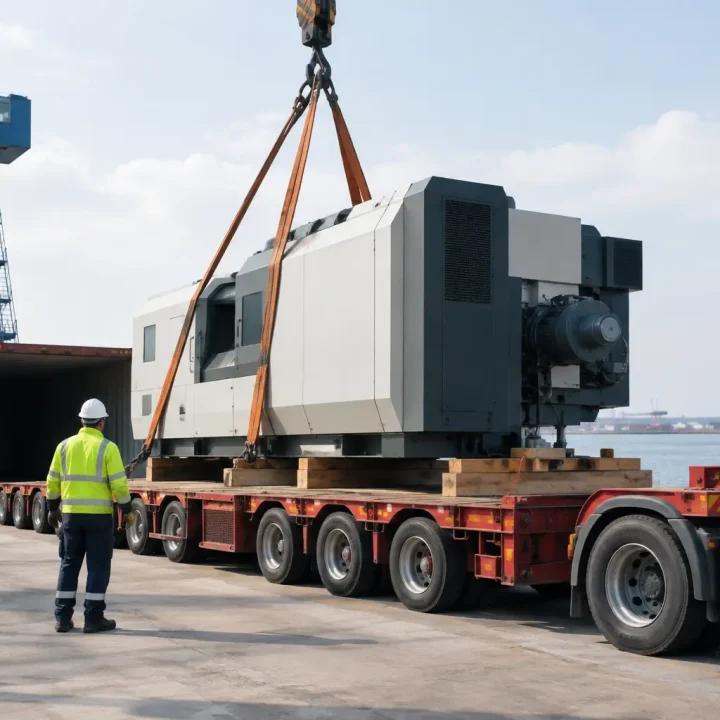
Every declaration needs accurate data, but some goods carry additional compliance responsibilities. Controlled, strategic or dual-use goods may require an export licence. Dangerous goods need the correct transport documentation and handling arrangements alongside the customs entry. High-value electronics, machinery, vehicles and goods containing regulated materials can also attract closer checks.
Vehicles are a common example. A car export may require proof of ownership, vehicle details, an export declaration and, depending on the destination, further documentation or destination-country clearance. Temporary exports, such as equipment leaving the UK for an exhibition, repair or project work, need particular care. The correct customs procedure can support re-importation later and help avoid unnecessary duty exposure.
Country of origin also matters. It is not always the country from which the goods are shipped. Origin can affect eligibility for preferential tariff treatment at destination and must be supported where a customer or overseas authority requires evidence. A Certificate of Origin may be needed for some markets, but it does not replace the export declaration.
What information is needed for an export declaration?
The quality of the declaration depends on the documents and instructions supplied before the freight moves. A forwarder or customs agent can submit an entry on your behalf, but the exporter remains responsible for ensuring the underlying information is complete and correct.
In most cases, preparation starts with a commercial invoice and packing list. The invoice should identify the seller and buyer, give a clear description of the goods, show quantity, currency and realistic customs value, and state the agreed Incoterms. Generic descriptions such as “parts”, “samples” or “equipment” are rarely sufficient. Customs needs to understand what the goods actually are and how they are being supplied.
The exporter will also normally need a UK EORI number, the consignee’s details, the destination country, commodity codes, gross and net weight, package details and the intended transport route. Commodity codes, often referred to as HS codes, are especially significant. They influence customs requirements, possible licensing controls and the level of detail expected by overseas authorities.
Where relevant, supporting evidence may include an export licence, preference statement, prior authorisation, proof of origin or a serial-number list. For dangerous goods, the customs declaration must match the dangerous goods paperwork, booking details and packaging arrangements. Inconsistencies are a frequent cause of cargo being stopped or rejected by a carrier.
The export process: from booking to departure
Export clearance works best when it is treated as part of transport planning rather than an administrative task left until the last minute. Once collection, route and carrier are known, the customs entry can be prepared against the actual movement.
First, confirm the commercial arrangement. Establish who is the exporter of record, who is responsible for export formalities under the agreed Incoterms, and whether the buyer needs particular documents for import clearance. Incoterms allocate costs and responsibilities between seller and buyer, but they do not remove statutory customs obligations.
Next, provide complete paperwork early enough for the declaration to be checked and submitted. A customs agent will use the data to create the entry and obtain a Movement Reference Number, or MRN. Depending on the shipment and port process, goods may need to be presented at a designated location or linked to the carrier’s inventory system before they can proceed.
Customs may grant permission for the goods to progress, request further information or select the shipment for inspection. Only once the required clearance process is complete should the consignment be treated as ready for departure. After export, evidence that the goods have left the UK is valuable for VAT records and for demonstrating that the export procedure has been discharged.
For groupage, consolidated freight and LCL shipments, timing matters even more. Your pallet may be one piece within a larger movement, but its paperwork must be ready to meet the consolidation cut-off. A late declaration from one supplier can affect warehouse handling, loading plans and the booked sailing or linehaul.
Export declarations and safety and security filings
An export declaration is not always the only border filing connected with a shipment. Depending on the route and transport mode, carriers or logistics providers may also be responsible for safety and security information, including an exit summary declaration in relevant circumstances.
These filings have different purposes and may be submitted by different parties. The exporter should therefore confirm the division of responsibility at the start of the booking. Assuming that a carrier’s manifest replaces a customs declaration, or that a customs entry covers every carrier requirement, can create a gap at the border.
A capable freight coordinator will align the customs entry with the collection time, port or airport cut-off, carrier booking and destination documentation. This is particularly valuable for urgent air freight, time-sensitive road movements and cargo that needs temporary storage before onward export.
Common errors that delay UK exports
Most export delays are preventable. Incorrect commodity codes, vague goods descriptions and values that do not match the invoice are recurring issues. So are mismatched package counts, missing licences and exporter details that do not correspond with the EORI number used on the entry.
Another common problem is submitting customs information too late. Freight may physically reach the port or airport, but without the correct MRN, clearance status or inventory reference, it may not be accepted for loading. Storage, demurrage, handling charges and missed departures can quickly outweigh the cost of preparing the declaration properly.
Businesses should also avoid treating the commercial invoice as a formality. A well-prepared invoice gives customs, carriers and overseas buyers a consistent account of the transaction. It reduces questions at both export and import stages and makes it easier to evidence the shipment for VAT and audit purposes.
Who should submit the declaration?
A business can submit its own export declarations if it has the right systems, authorisations, customs knowledge and internal controls. This can suit high-volume exporters with experienced compliance teams. However, it also requires ongoing attention to classification, procedure codes, record keeping and changing border rules.
Many exporters appoint a customs agent or freight forwarder to submit entries directly or indirectly on their behalf. This can be practical for occasional exporters, businesses using multiple transport modes or teams managing complex supply chains. The key is to agree who acts as declarant or representative, what authority is in place and who validates the data before submission.
Milky Way Logistics can coordinate export documentation, customs declarations, carrier bookings and onward transport as part of a tailored freight movement. That gives businesses one operational contact across collection, clearance and delivery rather than separate parties working to different timelines.
A final check before goods leave
Before collection, confirm that the commercial invoice, packing list, commodity codes, values, EORI details, licences and transport booking all describe the same shipment. If the goods, quantity, destination or route changes, the customs entry may need to change as well.
Export compliance is most effective when it is planned alongside the freight, not added after the cargo has reached the terminal. For a route-specific view of your customs requirements and transport options, request a tailored, no-obligation freight quotation before the goods are ready to move.