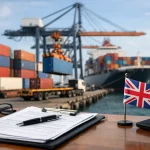
A shipment can be packed, booked and on schedule, then stop at the border because its commodity code is wrong, its invoice lacks detail or its declared value cannot be supported. The transport may be moving efficiently, but trade compliance determines whether the goods can legally move, what they cost to import and whether they reach the customer without avoidable delay.
For UK importers and exporters, compliance is not simply a customs task completed after goods have left the warehouse. It is a commercial control that affects landed cost, delivery promises, customer relationships and the ability to trade confidently across borders.
What trade compliance means in practice
Trade compliance is the process of ensuring that international goods movements meet the customs, tax, licensing, safety, sanctions and documentation rules that apply in the countries involved. It begins before collection and continues through export, transit, import clearance and record keeping.
The requirements vary by product, origin, destination, value and intended use. A standard pallet of retail goods moving from the UK to the EU needs a different approach from machinery imported from China, a temperature-sensitive air-freight consignment, or goods sent temporarily abroad for repair. There is no single document or declaration that makes every shipment compliant.
A workable process brings together accurate product information, the correct customs procedure, supporting documents and clear responsibility between buyer, seller, freight forwarder, customs agent and carrier. When these details are agreed early, clearance is more predictable and transport decisions are easier to make.
The trade compliance checks that matter most
Classify goods accurately
The HS code, often referred to as a commodity code or tariff code, is central to customs compliance. It identifies the goods for customs purposes and can influence duty rates, VAT treatment, licensing requirements, trade restrictions and statistical reporting.
Descriptions such as “parts”, “samples” or “equipment” are rarely sufficient. Customs authorities need to understand what the product is, what it is made from, how it functions and, where relevant, its technical specifications. A metal component, for example, may classify differently depending on whether it is a fastening, vehicle part, machine component or finished article.
Using an incorrect code can result in underpaid duty, overpaid duty, customs queries or delayed release. Classification should be based on product evidence rather than an assumption copied from an old shipment or supplier invoice. Where a product range is complex or regularly imported, maintaining a reviewed commodity-code database can reduce repeated errors.
Establish customs value and origin
Customs value is not always the same as the headline sales price. Depending on the transaction, it may need to account for elements such as freight, insurance, packing, royalties, commissions or assists supplied by the buyer. The correct valuation method depends on the commercial arrangement and the available evidence.
Origin is equally significant, but it is often misunderstood. Country of dispatch and country of origin are not necessarily the same. Goods shipped from a European warehouse may have been manufactured elsewhere, while goods assembled in one country may or may not acquire origin there under the relevant rules.
Origin can affect duty rates, eligibility for preferential tariff treatment, marking requirements and restrictions. If a reduced or zero tariff is claimed under a trade agreement, the importer must be able to support that claim with the required statement, evidence and record keeping. Preference is valuable, but only when the origin rules have genuinely been met.
Prepare documents that tell the same story
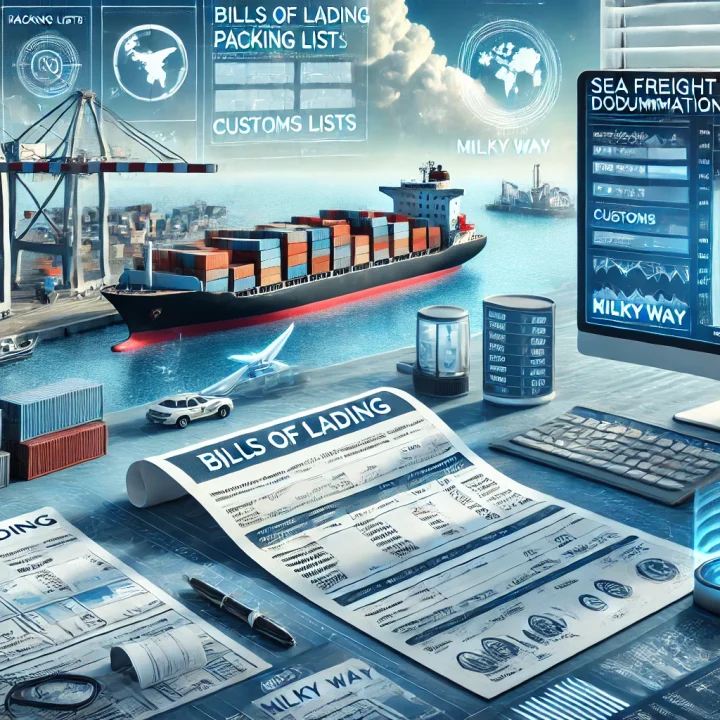
Customs declarations, commercial invoices, packing lists, transport documents and certificates should be consistent. Differences in quantities, values, weights, product descriptions or Incoterms can trigger questions at the border and make it harder to identify who is responsible for duties, taxes and clearance.
A clear commercial invoice should identify the seller and buyer, describe the goods accurately, show currency and value, state the agreed Incoterms, include origin where needed and provide enough information to support the declaration. The packing list should match the physical shipment, including package count, gross and net weights, and dimensions where relevant.
For some movements, additional documents may be required. These can include Certificates of Origin, licences, health or phytosanitary certificates, dangerous goods declarations, preference statements or transit paperwork. Requirements depend on the commodity and route, so a document check should happen before cargo reaches the port, airport or border terminal.
Check restrictions, licences and sanctions
Not every product can move freely to every market. Military and dual-use goods, certain chemicals, controlled technology, cultural goods, waste, food products, animal-derived materials and branded goods can all carry additional obligations. The fact that an item is commercially available does not mean it can be exported or imported without checks.
Sanctions screening is another essential control. Businesses should consider the parties involved in the transaction, the destination, the end user and the intended end use. A compliant shipment can still present a risk if goods are routed to a restricted party or used for a prohibited purpose.
This area requires judgement. A low-value parcel may pose limited customs risk but still require sanctions consideration. Conversely, a high-value machine may be lawful to ship but need technical information to establish whether export controls apply. When there is doubt, do not rely on a generic product name or an informal assurance from a customer.
Incoterms shape responsibility, not compliance itself
Incoterms help define the point at which cost, risk and transport obligations transfer between seller and buyer. They are useful for avoiding disputes, but they do not remove the need to meet customs requirements.
For example, a seller using DDP takes on substantial responsibility for delivering goods cleared for import, including duties and taxes where applicable. That may suit a buyer seeking a simple delivered price, but it requires the seller to understand destination-country registration, customs representation and tax obligations. In some markets, DDP is not the practical choice for an overseas seller.
Under FCA, FOB, CPT or DAP arrangements, the responsibilities change, yet both parties still need accurate data. The named place and selected Incoterms rule should be shown clearly on commercial documents. Choosing terms by habit, rather than matching them to the route and clearance arrangement, is a common source of unexpected charges.
Build compliance into the shipping workflow
The strongest controls are routine, not reactive. Before booking, collect the product description, commodity code, value, origin, package details, exporter and importer details, Incoterms, destination and any licence information. This gives the freight and customs teams time to identify gaps before goods are moving.
For regular trade lanes, standardise the process. Agree who supplies product data, who approves classifications, who issues invoices, who acts as importer of record and who receives customs queries. Keep supporting records organised and accessible. Customs authorities may ask for evidence after goods have cleared, particularly where duty relief or preferential origin has been claimed.
It is also sensible to review changes in suppliers, products, routes and commercial terms. A new factory, revised bill of materials, altered product function or different delivery term can change the compliance position. The original classification or origin assessment may no longer be valid.
Where a freight partner adds operational value
A freight forwarder cannot make commercial compliance decisions on a customer’s behalf without the necessary product and transaction information. However, experienced coordination can prevent basic errors from reaching the border.
Milky Way Logistics can review shipment documents, coordinate customs declarations, provide HS-code and commodity guidance, advise on Incoterms and manage transport across air, sea, road, rail and multimodal routes. This is particularly useful where collection, warehousing, export formalities, transit, destination clearance and final delivery need to work as one plan.
The practical benefit is visibility. When the customs data, documents and movement plan are aligned before departure, businesses are better placed to control costs, respond quickly to queries and keep customers informed.
Trade compliance is most effective when it becomes part of the order-to-delivery process rather than a last-minute clearance exercise. If you are planning an import, export or complex international movement, request a tailored, no-obligation freight quotation with the product and route details available. Early coordination can protect both the shipment schedule and the margin behind it.