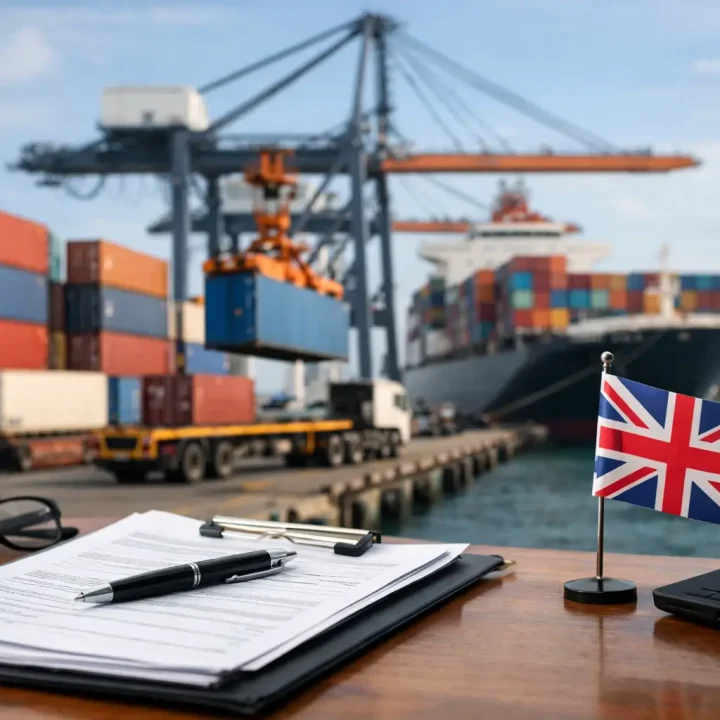
A container can be loaded, a vehicle booked and goods ready at the collection point, yet a missing commodity code or inconsistent invoice can still stop the shipment at the border. Export documentation essentials are not administrative extras. They are the information customs authorities, carriers and overseas buyers use to identify the goods, apply controls and release cargo for onward delivery.
For UK exporters, getting documents right first time protects delivery schedules, avoids storage and amendment charges, and gives customers confidence that their supply chain is under control. The exact paperwork depends on the commodity, destination, transport mode and sales terms, but the principles remain consistent.
Export documentation essentials: start with accurate shipment data
Every document should be built from one verified set of shipment details. When the commercial invoice, packing list, customs declaration and carrier booking show different information, customs queries become far more likely.
Confirm the legal exporter and buyer names, full addresses, contact details, VAT or tax numbers where required, country of origin, country of destination, number and type of packages, gross and net weights, goods description, values and currency. Product descriptions must be specific enough for a customs officer to understand what is being moved. “Parts” or “samples” may be technically true, but they are rarely sufficient. “Stainless-steel valve components for industrial water pumps” is clearer and easier to classify.
The commodity code is equally important. In the UK, goods are declared using the appropriate commodity code, which drives duty treatment, VAT rules, statistical reporting and possible licensing requirements at destination. A code selected simply because it appears close to the product can create exposure later. Classification should reflect the product’s material, function and level of processing, not just its commercial name.
Origin is separate from where goods are shipped from. A consignment exported from the UK may contain goods manufactured in China, Turkey or the EU. Declaring the correct origin matters where quotas, trade remedies, sanctions or preferential tariff claims apply.
The core documents for most commercial exports
Commercial invoice
The commercial invoice is the central trade document. It records the sale between exporter and buyer and is used by destination customs authorities to assess the goods and their declared value. It should include the invoice number and date, seller and buyer details, a clear description of each item, quantity, unit price, total value, currency, Incoterms, country of origin and the relevant commodity code where requested.
The value must reflect the genuine transaction value. Declaring an artificially low value to reduce import duty can result in customs penalties, delayed release and problems for both exporter and consignee. For free-of-charge samples, warranty replacements or returns, use a realistic customs value and clearly explain the reason for the shipment.
Packing list
A packing list explains how the goods are physically packed. It should show package numbers, package type, dimensions, gross and net weight, and the contents of each carton, crate, pallet or container. This gives carriers, warehouse teams and customs officers a practical record for handling and inspection.
A separate packing list is particularly valuable for mixed consignments, machinery, high-value goods and containerised sea freight. It also helps a receiving warehouse identify shortages or damage without opening every package.
Export declaration and movement reference
Most goods leaving Great Britain require an export declaration submitted through the relevant customs process. The declaration provides HMRC with the information needed to authorise export and issue a Movement Reference Number, commonly known as an MRN.
The declaration must match the commercial documents and the physical shipment. It is also vital that it is completed at the correct point in the process. A collection vehicle arriving at the port before the required customs formalities are in place can lead to missed sailings or additional handling. The route, port of exit and mode of transport affect the procedure, so planning it alongside the freight booking is more reliable than treating it as a final task.
Transport document
The carrier will issue a transport document appropriate to the service. This may be an air waybill for air freight, a bill of lading or sea waybill for sea freight, or a CMR consignment note for international road haulage.
These documents confirm carriage arrangements and identify the shipper, consignee, goods, route and transport provider. Their legal role differs by mode and service type. For example, an original bill of lading may carry title implications, while an air waybill does not. Exporters should not assume every transport document works in the same way, particularly where payment terms or documentary collections are involved.
Documents required only for certain goods or markets
Not every export needs a certificate or licence, but the wrong assumption can be costly. Requirements can depend on the destination country, the buyer’s import regime and the nature of the product.
A Certificate of Origin may be requested by the buyer, bank or destination customs authority. It confirms where the goods originate and can support a tariff preference where the relevant trade agreement allows it. Preference is not automatic simply because goods travel from the UK. The product must meet the agreement’s origin rules, and the evidence must support the claim.
Controlled, military, dual-use and certain high-technology goods may need an export licence. So can goods subject to sanctions restrictions. Food, plants, animal products, chemicals, pharmaceuticals and waste can require health certificates, phytosanitary documents, safety data or other regulatory paperwork. Dangerous goods need correctly completed declarations and packaging records in addition to standard customs documents.
For temporary exports – such as exhibition equipment, professional tools, repaired machinery or goods moving for testing – the paperwork should clearly show the temporary nature of the movement. The correct customs procedure can prevent duty being charged unnecessarily when the goods return.
Incoterms define responsibilities, not customs compliance
Incoterms should appear consistently on the commercial invoice and align with the agreement between buyer and seller. They establish who arranges transport, insurance, export formalities, import clearance and delivery at different stages of the journey.
However, Incoterms do not remove the need for complete declarations or clear instructions. Under FCA, for example, the seller may be responsible for export clearance while the buyer arranges main carriage. Under DAP, the seller may coordinate most of the journey, but the buyer normally handles import customs formalities and duty payment. The practical division of responsibilities needs to be understood before the cargo is collected.
It also matters whether the Incoterm is suitable for the mode. Some terms work across air, road, rail and sea freight, while others are designed specifically for sea and inland waterway transport. Selecting terms by habit rather than by the actual transport plan can leave gaps in cost and risk responsibility.
Build a document check before the goods move
A simple pre-shipment check can prevent most avoidable documentation issues. Before collection, confirm that:
- the exporter, consignee and delivery details are identical across the booking and trade documents;
- the commodity code, origin, quantity, weight and value have been checked against product and packing records;
- the Incoterm, named place and currency reflect the commercial agreement;
- any licence, certificate, dangerous goods declaration or destination-specific requirement is available; and
- the export declaration and carrier instructions are prepared early enough for the planned departure.
For regular exporters, create a controlled product data file for each SKU or product family. It should hold the agreed commodity code, typical description, origin, weight, dimensions, licence status and supporting evidence. This reduces repeated manual entry and helps teams spot when a product change could affect customs treatment.
Why timing and communication matter
Documentation is often delayed because commercial, warehouse and transport teams work from different versions of the shipment information. A last-minute change to the number of pallets, invoice value or buyer address may seem minor, but it can require the declaration and carrier documents to be amended as well.
For urgent air freight, the priority is supplying accurate data early enough for booking and security requirements. For sea freight, cut-off times for verified gross mass, container loading, port delivery and customs clearance need to be planned around the vessel schedule. Road freight into Europe can require close coordination between the exporter, haulier, customs agent and receiving party, especially when delivery appointments are fixed.
Milky Way Logistics can coordinate documentation checks alongside customs declarations, carrier bookings and international transport, giving exporters one practical point of contact from collection through to final delivery.
Good export paperwork should make a shipment easier to move, inspect and receive – not create questions after the lorry has left. If you are planning a new route, moving controlled or complex cargo, or simply want a second check on your current process, request a tailored, no-obligation freight quotation before the goods are ready to dispatch.