A production delay in Manchester, a retailer waiting in New York, or a container deadline at Felixstowe can quickly turn shipping from UK to USA into a business-critical decision. The right freight plan is not simply about finding the lowest carriage rate. It must balance transit time, cargo type, customs requirements, delivery point and the cost of disruption if goods arrive late or documents are incomplete.
For commercial cargo, the most effective route depends on what you are moving and how urgently it is needed. Air freight may protect a launch date or prevent a stockout. Sea freight can reduce the unit cost of regular, higher-volume movements. A freight forwarder should coordinate collection, packing, export formalities, carrier booking, US clearance and final delivery as one managed operation.
Choosing the right shipping from UK to USA service
The UK to USA corridor is served by frequent air and ocean connections, but the fastest-looking option is not always the best commercial choice. Start with the shipment’s physical profile: dimensions, weight, stackability, value, sensitivity and whether it contains regulated or dangerous goods. Then assess the required delivery date, not just the port or airport departure date.
Air freight for urgent and high-value cargo
Air freight is generally the right option for time-critical stock, electronics, spare parts, samples, fashion goods, medical equipment and other high-value consignments. Airport-to-airport transit can be quick, but the full door-to-door timeline also includes collection, export security procedures, airline handling, US customs clearance and local delivery.
Pricing is based on chargeable weight. Airlines charge according to whichever is greater: the actual weight or the volumetric weight calculated from the shipment’s dimensions. A large but lightweight consignment can therefore cost more than expected. Careful carton design, palletisation and consolidation can materially improve the rate.
Direct flights can save time, while indirect services may offer lower costs or better capacity. For urgent freight, the value of a confirmed departure and proactive monitoring often outweighs a small difference in headline price.
Sea freight for planned and larger shipments
Sea freight is usually the more cost-effective option for pallets, machinery, retail replenishment, raw materials and other cargo that can move to a planned schedule. Full container load, or FCL, gives one shipper exclusive use of a container. It is well suited to larger volumes, cargo requiring greater control, or consignments that benefit from being loaded and sealed at origin.
Less than container load, or LCL, lets several shippers share container space. It can be practical for smaller volumes, although consolidation and deconsolidation add handling points and can extend the overall transit time. The comparison should therefore include destination charges, handling and delivery costs, not only the ocean rate.
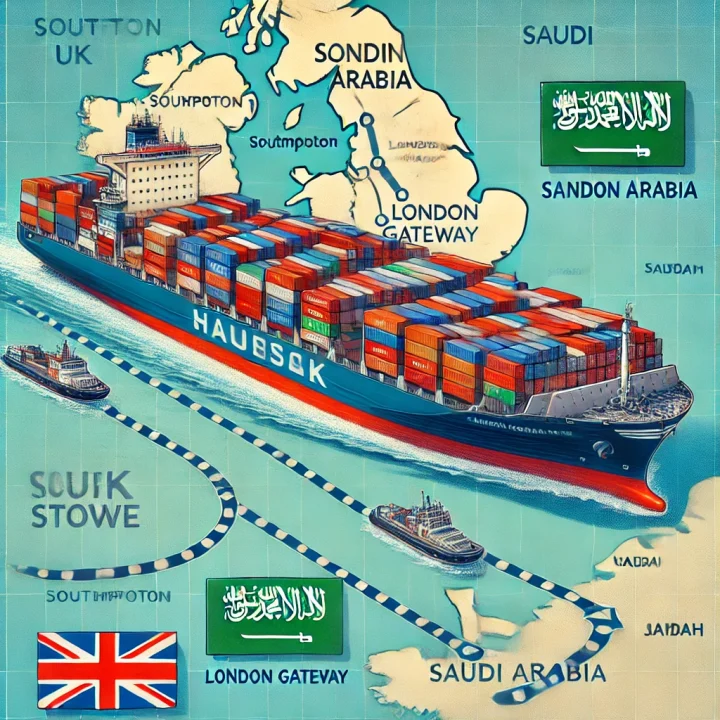
The principal UK gateways may include Felixstowe, Southampton and London Gateway, while US routing depends on the final destination. East Coast ports can be appropriate for delivery into New York, New Jersey, Georgia or Florida. Cargo for the Midwest or West Coast may require a different port and onward rail or road plan. A door-to-door route should be designed around the destination, not selected solely because a particular port offers a cheap sailing.
What affects the cost of shipping to the USA?
There is no single standard price for UK-US freight. Rates move with carrier capacity, fuel costs, seasonality, port congestion, equipment availability and the level of service required. A clear quotation should distinguish freight charges from collection, export handling, customs documentation, destination clearance, terminal fees, delivery and any insurance cover requested.
The main cost drivers are the freight mode, chargeable weight or cubic volume, collection postcode, destination location, commodity, packing requirements and delivery access. A tail-lift delivery, timed booking, residential location or remote final-mile address may all require additional planning. Oversized cargo, dangerous goods and temperature-sensitive products require specialist handling and should be declared from the outset.
For sea freight, compare FCL and LCL against the real volume of cargo. At a certain point, a full container can be better value and offer fewer handling risks than several cubic metres of shared-container freight. For air freight, ask whether the shipment can move on a deferred service if the delivery deadline allows it. This can produce meaningful savings without compromising the supply chain.
Cargo insurance should also be considered. Carrier liability is limited and may not reflect the commercial value of goods. Insurance decisions should be based on the goods’ value, vulnerability, route and the financial impact of loss or damage.
Customs clearance with confidence
Exporting goods from Great Britain requires a UK export declaration and accurate commodity information. Importing into the United States requires the correct customs entry, with duty and taxes assessed according to the goods, their value and country of origin. Customs compliance is not an administrative afterthought. It affects release, cost and delivery reliability.
The US importer of record is responsible for the accuracy of the import declaration and for applicable duties, taxes and fees. Before shipping, confirm who will act as importer of record, who will pay destination charges and which Incoterm applies. Misunderstandings here are a common cause of delayed deliveries and unexpected invoices.
Goods must be classified using the appropriate commodity code or tariff classification. Classification influences duty treatment, regulatory controls and data requirements. The country of origin also matters. It is not necessarily the country from which goods are dispatched, but the country where they were manufactured or substantially transformed.
Many lower-value consignments may qualify for simplified treatment under US de minimis rules, but eligibility depends on the goods, their value, the shipment structure and current US requirements. Businesses should not assume that every small parcel is duty-free or that several related shipments can be split without consequence. Regulations and enforcement practices can change, so check the applicable position before dispatch.
For ocean freight, an Importer Security Filing is generally required before cargo is loaded for the United States. This filing needs accurate supplier, manufacturer, buyer, commodity and container information well before vessel departure. Late or incorrect data can lead to penalties or cargo delays, making early document preparation essential.
Documents that keep the shipment moving
A commercial invoice and packing list form the foundation of most UK-to-USA shipments. The invoice should clearly describe the goods in plain commercial terms, show quantities and values, state the currency, identify buyer and seller, and include the relevant commodity classification and origin details where required. Descriptions such as “parts”, “samples” or “goods” are too vague for reliable customs processing.
The packing list should match the physical consignment. It needs to show the number and type of packages, weights, dimensions and contents. This is particularly useful for palletised freight, machinery, mixed consignments and cargo subject to inspection.
Depending on the commodity, additional documentation may be needed. This can include certificates of origin, licences, safety data sheets for dangerous goods, food or plant documentation, technical specifications, vehicle paperwork or documents supporting a temporary import. Wood packaging used in international freight should normally meet ISPM 15 requirements, including the correct treatment mark, to reduce the risk of US agricultural inspection issues.
A practical pre-shipment check should cover four points: the goods are correctly described and classified; the declared value is supportable; the importer of record is confirmed; and the packing is suitable for the chosen mode. Resolving these points before collection is far easier than correcting them after arrival.
Packing and delivery planning matter as much as transport
A well-priced freight service can still fail if cargo is poorly protected or the receiving site cannot accept it. Cartons should be strong enough for stacking and handling, pallets should be stable and properly wrapped, and fragile goods may require export crating. Machinery and unusually shaped cargo often need a bespoke lifting, securing and loading plan.
At destination, establish whether the receiver has a loading bay, forklift, delivery booking system and suitable access for the delivery vehicle. If not, arrange a tail-lift, smaller vehicle, timed service or final-mile solution before the freight departs the UK. This is especially relevant for deliveries into city centres, retail premises and construction sites.
Shipment visibility is equally valuable. Regular updates should identify collection completion, departure, arrival, customs status and final delivery progress. Where a delay occurs, early communication gives purchasing, sales and operations teams time to adjust rather than react.
For businesses shipping from UK to USA regularly, consistency comes from treating each movement as part of a wider supply chain rather than a one-off booking. Milky Way Logistics can coordinate air, sea and multimodal options alongside documentation, customs support, storage and final delivery, with one point of contact managing the movement from collection to consignee.
The strongest next step is to request a tailored, no-obligation freight quotation with the commodity, package dimensions, weights, collection postcode, US delivery location and required delivery date. Those details make it possible to build a route that protects both your budget and your customer commitment.