A customs guarantee can be the difference between goods moving under the right procedure and a consignment being held while financial security is arranged. For UK traders, customs guarantee requirements arise most often when duty and import VAT may become payable later, or where goods are moving under customs control. They are not a standard charge on every shipment, but where they apply, the guarantee must be in place before the movement or procedure begins.
For an importer managing container arrivals, a wholesaler using duty deferment, or an exporter moving goods through Europe under transit, the practical question is simple: what exposure must be secured, who provides the security, and is the customs entry being made under the correct authorisation?
What is a customs guarantee?
A customs guarantee is financial security provided to HMRC or another customs authority against a potential customs debt. It protects the authority if import duty, import VAT, excise duty, interest or other charges become due and are not paid.
The security may cover a single transaction, known as an individual guarantee, or repeated movements and declarations under an approved arrangement, known as a comprehensive guarantee. A guarantee does not remove the underlying duty or VAT liability. It supports the obligation while goods are in transit, held under a special procedure, or released with payment deferred.
The amount is normally based on the potential customs debt. That means the customs value, commodity code, origin, duty rate, VAT treatment and quantity of goods all matter. A poorly classified product or an incorrect value can therefore affect both the declaration and the level of security required.
When customs guarantee requirements apply
Whether a guarantee is needed depends on the customs procedure, the country of movement and the trader’s authorisations. The main situations are outlined below.
Customs duty and VAT deferment
Businesses with a duty deferment account can release eligible imports without paying customs charges at the point of clearance. Charges are collected later, usually by direct debit. HMRC may require a guarantee to support the account, although guarantee waivers are available in some circumstances.
A deferment account can improve cash flow and reduce delays at the border, particularly for regular importers. However, the account limit must be sufficient for the expected monthly liability. If several high-value consignments arrive close together, the available balance can be used quickly. Monitoring the account is as important as setting it up.
Import VAT is often accounted for through Postponed VAT Accounting by VAT-registered businesses, rather than paid through a deferment account. This can materially reduce the security requirement, but it depends on the business’s VAT position and the declaration being completed correctly.
Transit movements
Transit allows goods to move under customs control between locations without duties and taxes being paid at every border or point of entry. Common examples include goods travelling from an EU port to an inland customs office, or non-UK goods moving through Great Britain before export.
Under the Common Transit Convention, a guarantee is generally required to cover the potential customs debt during the movement. It may be arranged as an individual guarantee for a one-off movement or through a comprehensive guarantee for regular transit operations. The guarantee needs to be valid in every country covered by the route.
Transit offers flexibility, but it also carries strict operational responsibilities. Goods must follow the declared movement, arrive at the intended office of destination and be discharged properly. A movement that is not discharged can leave the principal exposed to a customs debt claim, even where the goods have physically arrived.
Special procedures
Guarantees are frequently relevant to customs special procedures, including customs warehousing, inward processing, temporary admission, end-use and outward processing. These procedures can suspend, reduce or relieve duty and VAT in specific circumstances, but the relief is conditional.
For example, temporary admission may allow equipment, samples or vehicles to enter the UK temporarily without full duty and VAT being paid, provided the conditions and re-export deadline are met. Inward processing can support manufacturers importing goods for processing and re-export. In both cases, customs may require security for the potential debt while the goods remain under the procedure.
The exact requirement can vary. Some authorisations, goods or circumstances may qualify for a reduced guarantee, an exemption or a waiver. The right answer depends on the procedure, the trader’s compliance record, financial standing and the level of risk assessed by HMRC.
Other controlled or high-risk goods
Excise goods, certain agricultural products, goods subject to trade measures and cargo requiring licences can involve additional controls. A customs guarantee may sit alongside other requirements such as excise movement guarantees, health certificates, import licences or safety and security declarations.
Do not assume that a standard commercial invoice and transport booking are enough. Border formalities must reflect the goods themselves, their origin and their intended use.
How the guarantee amount is calculated
There is no single fixed percentage for all businesses. Customs authorities consider the maximum potential debt that could arise during a movement or across concurrent operations. This commonly includes customs duty and may include import VAT, excise duty and other charges where applicable.
For a comprehensive guarantee, the calculation may be based on the highest amount of goods expected to be under the procedure at any one time, rather than the annual value of trade. A business importing one container per month has a different exposure from a business with multiple trailers, containers and transit movements operating at once.
This is why accurate commercial data matters. The customs value should reflect the transaction value and required additions where applicable, such as freight, insurance, royalties or assists. Commodity codes must be sufficiently precise, and preferential origin should only be claimed where the supporting evidence is available. Lowering a declared value or using a generic code to reduce a guarantee is not a cost-saving measure – it creates compliance and recovery risk.
Individual versus comprehensive guarantees
An individual guarantee is normally suited to occasional transactions. It can be provided in cash, through a guarantor or by another accepted method. It is specific to one customs operation or movement and may be practical for a business with infrequent transit needs.
A comprehensive guarantee is designed for regular users of transit or special procedures. It can cover multiple declarations or movements up to an authorised reference amount. It requires a formal application and ongoing control, but can make recurring operations more efficient.
The trade-off is straightforward. Individual guarantees can be easier to arrange for an isolated shipment, while comprehensive arrangements reduce repetition for regular trade but require stronger internal processes, evidence and financial planning.
Preparing for a guarantee application
A successful application starts before the form is submitted. Businesses should establish their expected movement volumes, the value and duty profile of goods, the procedures they intend to use and the maximum potential exposure at one time. They should also confirm who will act as the customs declarant and, for transit, who will be the principal responsible for the movement.
HMRC may assess a trader’s customs compliance, record-keeping, solvency and ability to meet obligations. Supporting information can include financial accounts, cash-flow evidence, VAT details, customs history, procedure records and forecasts of anticipated customs debt. The evidence required will depend on the application and any request for a reduced amount or waiver.
It is sensible to involve your finance team early. A guarantee can tie up a bank facility or require a guarantor, so it has a real cost even where no duty is immediately paid. The cheapest option on paper is not always the best operational choice if it leaves little capacity for seasonal stock, urgent shipments or a new supplier launch.
Common problems that delay goods
Most guarantee-related disruption is avoidable. A transit guarantee that does not cover all countries on the planned route, a deferment account with insufficient available balance, or a procedure code used without the matching authorisation can all stop clearance.
Another frequent issue is treating the forwarder, customs agent and importer as though they share the same legal responsibility. A logistics provider can coordinate declarations, documents and movement status, but the importer or transit principal may retain key liabilities depending on the representation and procedure used. Responsibilities should be clear before cargo is collected.
Businesses should also keep procedure records after release or arrival. Customs warehousing stock records, evidence of processing, proof of re-export and transit discharge messages are not administrative extras. They demonstrate that the conditions supporting duty relief or suspended liability have been met.
Build the guarantee into the shipment plan
Customs guarantees work best when they are considered alongside the route, Incoterms, customs value and delivery timetable, not after the vessel has arrived or the lorry is at the border. A shipment moving through several countries may need a different transit approach from cargo cleared directly into free circulation at its port of arrival.
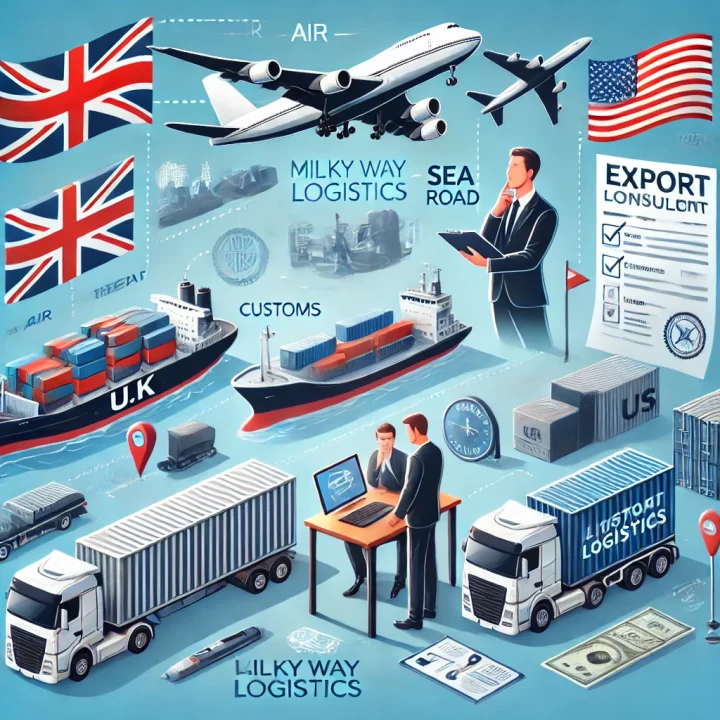
Milky Way Logistics can coordinate customs documentation, commodity and procedure checks, transit planning and freight movements across air, sea, road and rail services. For regular import programmes or a one-off movement, a tailored freight quotation can help identify the practical clearance route before goods are committed to travel.
The right guarantee arrangement should give your business enough operating headroom without securing more exposure than the trade genuinely creates. Get the procedure, values and responsibilities agreed early, and customs becomes a controlled part of the supply chain rather than a last-minute obstacle.