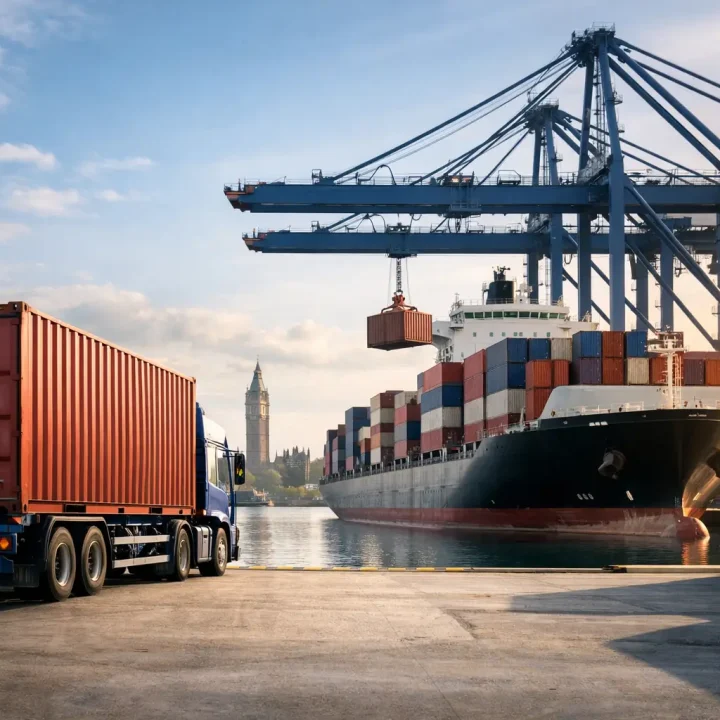
A lorry can still leave Birmingham today and deliver a pallet in Paris tomorrow. The difference is that post-Brexit shipping UK Europe now involves a border process that needs to be planned as carefully as the transport itself. A missing commodity code, unclear Incoterm or incomplete invoice can stop an otherwise straightforward consignment at the port, creating avoidable storage costs and delayed delivery.
For UK businesses trading with the EU, the most reliable approach is to treat every movement as an international shipment. That means confirming the commercial terms, preparing accurate customs data and choosing a transport service that fits the cargo, delivery deadline and budget.
What changed for UK-Europe freight?
Since the UK left the EU customs union and single market, most goods moving between Great Britain and EU member states require export and import customs declarations. Customs authorities need to know what is being shipped, its value, origin, intended use and the parties responsible for the transaction.
This does not mean European road haulage has become impractical. Groupage, part loads and full trailer loads continue to move between the UK and Europe every day. However, the paperwork and clearance process now form part of the lead time. Businesses that provide clear information before collection are far less likely to face holds at the border.
Northern Ireland follows different arrangements under the Windsor Framework. Goods moving between Great Britain, Northern Ireland and the EU may therefore have different customs and safety requirements. If your supply chain includes Northern Ireland, check the movement route and goods status before booking transport.
Customs declarations are part of the shipment
A customs declaration is not an optional administrative extra. It is the formal record used to clear goods for export and import. In practice, the declaration must match the commercial invoice, packing list and the physical consignment.
Your freight partner or customs agent can submit declarations, but the importer and exporter remain responsible for the accuracy of the underlying information. Incorrect descriptions such as “parts”, “samples” or “general merchandise” create risk because they do not properly identify the goods. A precise description should state what the product is, what it is made of and, where relevant, its purpose.
The core shipment information usually includes:
- exporter and importer details, including valid GB or EU EORI numbers
- accurate commodity or HS codes and the goods’ country of origin
- commercial value, currency, quantity, weight and packaging details
- the agreed Incoterm, transport route and any applicable licences or certificates
Some routes also require pre-lodged movement references and a Goods Movement Reference before a vehicle checks in at a GVMS port. Requirements depend on the port, direction of travel and customs procedure, so this should be checked before the lorry arrives rather than at the departure gate.
Duty is not always payable, but origin matters
One of the most common misunderstandings in post-Brexit shipping is that goods sold from the UK to the EU are automatically duty-free, or vice versa. The UK-EU Trade and Cooperation Agreement can allow zero tariffs and zero quotas on qualifying goods. The key word is qualifying.
The goods must meet the relevant rules of origin. A product manufactured in the UK from sufficient UK-originating materials may qualify, but an item simply stored, repacked or resold from the UK may not. The same applies to goods moving from the EU into Great Britain. The origin of a product is not necessarily the country from which it is dispatched.
If preferential origin cannot be supported, customs duty may be due at import. Rates depend on the commodity code, product type and destination country. For regular importers, accurate classification and origin records are worthwhile cost-control measures, especially for high-volume or higher-value goods.
VAT, Incoterms and who carries the risk
Import VAT is separate from customs duty. It may be payable even where a shipment qualifies for zero tariff treatment. UK VAT-registered businesses importing into Great Britain can often use postponed VAT accounting, subject to the applicable rules, which can improve cash flow by accounting for import VAT on the VAT return rather than paying it immediately at the border.
For EU deliveries, VAT treatment depends on the transaction and country involved. Businesses should take tax advice where needed, particularly for direct-to-consumer sales, stock held overseas or multi-country distribution.
Incoterms should be agreed before goods are collected. They establish who arranges and pays for transport, insurance, export formalities, import clearance, duty and VAT. They also identify where risk transfers from seller to buyer.
For example, DAP can work well when the seller arranges delivery but the buyer acts as importer and pays destination charges. DDP places much more responsibility on the seller, including destination import formalities and taxes. It can be useful in selected circumstances, but it should never be offered casually. The seller needs the correct registration, customs process and local tax position in the destination market.
Choosing the right freight service for Europe
Road freight remains the practical choice for many UK-EU supply chains. It offers direct collection and delivery, regular departures and flexibility for pallets, cartons, machinery and non-containerised cargo. The best service depends on shipment size and urgency.
Groupage is usually cost-effective for smaller consignments sharing trailer space with other freight. It may take longer because goods are consolidated and can pass through hub operations. A dedicated vehicle or full load provides more control over collection and delivery timing, often making it suitable for urgent production materials, sensitive equipment or larger volumes.
For some long-distance or high-volume routes, multimodal options involving rail or short-sea services can support cost and capacity planning. Air freight may be the right option for urgent, high-value or time-critical goods, although the freight cost is normally higher. The sensible decision is based on total landed cost, delivery commitment, cargo characteristics and the impact of delay – not the headline transport rate alone.
Goods that need extra planning
Certain shipments need more than standard customs data. Food, plants, animal products and some agricultural commodities can require health certificates, pre-notification and border control checks. Products subject to sanitary and phytosanitary controls should be reviewed well before the planned collection date.
Dangerous goods need correctly completed dangerous goods documentation, compliant packaging and a carrier authorised to handle the relevant classification. Machinery, oversized cargo and fragile equipment may require specialist crating, loading plans, permits or vehicle arrangements. High-value goods may need enhanced security, monitored handling and appropriate cargo insurance cover.
These are not reasons to avoid cross-border trade. They are reasons to appoint a freight coordinator early enough to check the route, carrier capability and documentation requirements before the goods are packed.
A practical process that prevents border delays
The strongest post-Brexit shipping process begins before the purchase order is issued. Confirm the Incoterm and importer of record, then establish the commodity code, origin and likely duty position. Once the shipment is ready, provide the final invoice and packing details early enough for customs declarations and any pre-lodgement requirements to be completed.
Make sure weights, package counts and values are consistent across every document. If the goods change after the invoice is created, update the paperwork rather than relying on a verbal explanation. Customs systems and border officials work from the declared data.
It is also sensible to build realistic clearance time into customer promises. Regular routes can run efficiently, but inspections, port congestion, seasonal demand and incomplete information can affect transit. A planned delivery window is more dependable than a commitment based solely on driving hours.
Milky Way Logistics coordinates European road haulage, customs documentation, carrier bookings and shipment updates as one managed process. For businesses with regular movements, this creates a repeatable workflow rather than a new customs exercise for every load.
Make the border a planned part of the route
Post-Brexit trade rewards preparation. When the classification, origin, Incoterm and documents are clear, shipping between the UK and Europe remains a dependable route for stock replenishment, manufacturing supply and customer delivery. Request a tailored, no-obligation freight quotation early in the process, and the transport plan can be built around your cargo and commercial deadlines rather than around a last-minute border problem.